
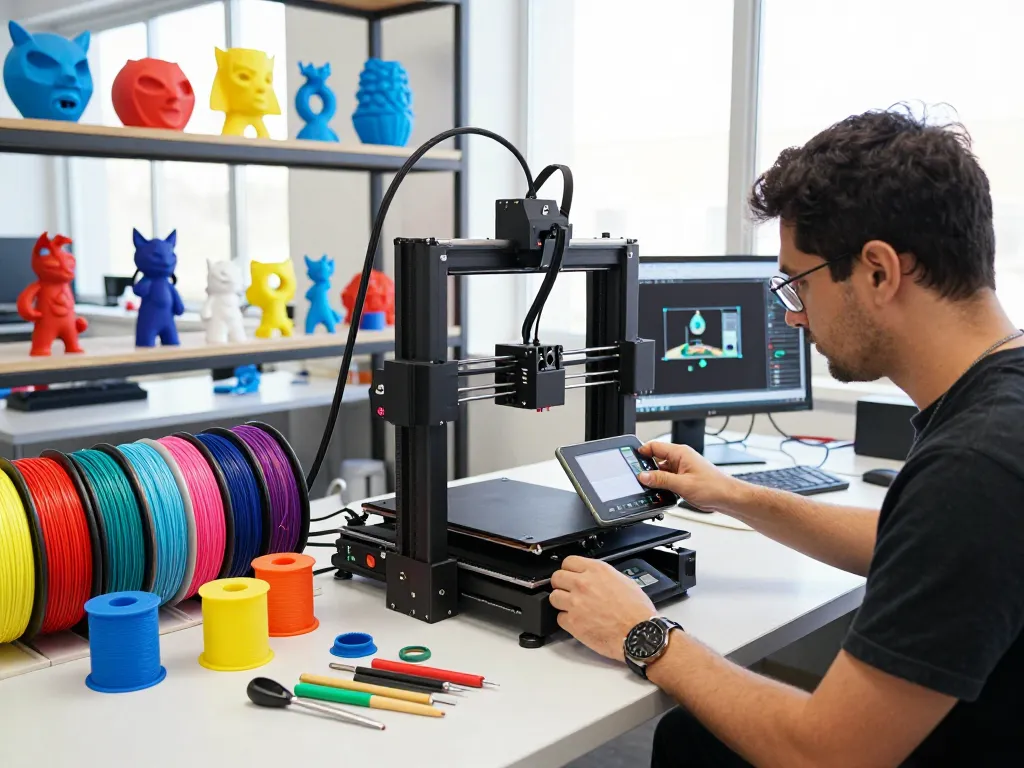
Understanding the Basics of 3D Printing
3D printing, also known as additive manufacturing, is revolutionizing the way we produce goods, from small prototypes to full-scale production. This innovative technology allows for the creation of three-dimensional objects directly from a digital model, utilizing a layer-by-layer approach. As we delve into the intricacies of 3D Printing, we aim to demystify its processes and explore its historical evolution and various applications across industries.
What is 3D Printing and How Does it Work?
At its core, 3D printing involves converting a digital 3D model into a physical object using a printer. The process begins with a CAD (Computer-Aided Design) model or a digital file downloaded from online repositories. The printer constructs an object by depositing material layer by layer, which can be a variety of substances including plastics, metals, and even living cells in the case of bioprinting. The most common methods of 3D printing include Fused Deposition Modeling (FDM), Stereolithography (SLA), and Selective Laser Sintering (SLS).
Historical Evolution of 3D Printing Technology
3D printing has its roots in the early 1980s when Chuck Hull invented Stereolithography, which allowed for the creation of 3D models through ultraviolet light. This innovation paved the way for various types of 3D printing technologies. In the decades that followed, new methods and materials were developed, significantly enhancing the capabilities and applications of 3D printing. By the 2000s, as the technology became more accessible and affordable, it gained traction among hobbyists and professional sectors alike.
Types of 3D Printing Technologies Explained
There are several prominent types of 3D printing technologies, each with unique benefits and challenges. The main types include:
- Fused Deposition Modeling (FDM): One of the most popular methods, particularly for home users and small businesses, FDM works by melting and extruding thermoplastic filament to form layers.
- Stereolithography (SLA): This method uses a light source to cure liquid resin into hardened plastic. It’s known for producing high-quality, detailed parts.
- Selective Laser Sintering (SLS): SLS utilizes a laser to fuse powdered material, allowing for greater complexity and functional parts.
- Digital Light Processing (DLP): Similar to SLA, DLP uses a projector to flash a single image, curing an entire layer at once, which can significantly speed up the printing process.
Applications of 3D Printing Across Industries
The versatility of 3D printing has facilitated its adoption across diverse industries, revolutionizing traditional manufacturing processes.
3D Printing in Manufacturing: Efficiency and Flexibility
In manufacturing, 3D printing allows for rapid prototyping and flexible production. Companies can quickly iterate designs, reduce time-to-market, and lower production costs. Parts that would traditionally require multiple components can be printed as a single, complex part. This not only decreases assembly time but also enhances durability and performance.
Innovative Uses of 3D Printing in Healthcare
Healthcare is one of the most promising fields for 3D printing, enabling the creation of custom prosthetics, implants, and even bioprinted tissues. Surgeons can print patient-specific models to plan complex surgeries, improving outcomes and reducing risks. Moreover, the ability to print medical devices on demand helps in addressing shortages and enabling personalized medicine.
3D Printing in Architecture: Redefining Design
In architecture, 3D printing is redefining design by allowing architects to create intricate models and even construct buildings. Techniques like concrete printing can lead to the rapid construction of affordable housing while minimizing waste. This innovation also provides architects with the flexibility to explore designs that would be challenging or impossible with traditional methods.
Choosing the Right 3D Printer for Your Needs
As the demand for 3D printing continues to grow, selecting the right printer becomes crucial for achieving your goals.
Key Features to Consider in 3D Printers
When choosing a 3D printer, several features should be taken into account:
- Print Volume: This refers to the maximum size of the object you can print. Consider what size projects you will be working on.
- Material Compatibility: Ensure the printer can handle the materials you plan to use, whether they are plastics, metals, or specialized resins.
- Print Resolution: Higher resolution provides finer detail but may increase print times.
- Ease of Use: Look for user-friendly interfaces, reliable software, and good customer support.
Comparative Analysis of Popular 3D Printer Models
Several 3D printers stand out in the market today, catering to various users from hobbyists to professionals. Popular models include:
- Creality Ender 3: An affordable entry-level option with a robust community supporting modifications and upgrades.
- Prusa i3 MK3S: Known for its reliability and print quality, it offers advanced features and a user-friendly design.
- Ultimaker S5: Targeted towards professionals, this printer excels in large-format printing and material versatility.
Cost Breakdown: Hobby vs. Professional 3D Printing
The cost of 3D printing can significantly vary based on usage:
- Hobby Use: Hobbyists can expect to spend between $300 and $1,000 on a printer, with additional costs for materials averaging $20 to $100 per month.
- Professional Use: Businesses may invest from $5,000 to over $50,000 for high-end printers, with project-based material costs climbing to $100-500 or more.
Best Practices in 3D Printing Design
Designing for 3D printing requires a unique approach to ensure optimal results.
Creating Effective CAD Models for 3D Printing
To create effective CAD models, one must consider the limitations and strengths of 3D printing. Design models should include support structures if necessary, optimize for the least amount of material use, and align with the capabilities of the chosen printing technology.
Common Pitfalls in 3D Printing Designs and How to Avoid Them
Common pitfalls include creating overly complex geometries that are difficult to print, underestimating the need for supports, and neglecting shrinkage rates of materials. Testing prototypes and obtaining feedback from the printing community can mitigate these issues.
Finishing Techniques for High-Quality 3D Prints
Finishing techniques can greatly enhance the aesthetic and functional qualities of 3D prints. Options include sanding, painting, or using chemical smoothing techniques to achieve a professional-looking finish.
The Future of 3D Printing: Trends and Predictions for 2026
As we look to the future, the evolution of 3D printing technology promises exciting developments.
Emerging Materials in 3D Printing Technology
The industry is witnessing an influx of advanced materials, including multi-material options and eco-friendly filaments made from recycled plastics or bioplastics. These advancements will enhance the sustainability and functionality of printed objects.
Environmental Impact and Sustainability in 3D Printing
3D printing has the potential to reduce waste compared to traditional manufacturing by using only the necessary materials. Continued research and development will likely lead to more sustainable practices in the industry.
Future Innovations: What to Expect in 3D Printing
We can anticipate innovations such as faster printing technologies, advancements in bioprinting for medical applications, and more personalized printing solutions tailored to consumer needs. These trends suggest that 3D printing will increasingly become integrated into everyday life and various industries.
Frequently Asked Questions
How much does it cost to have someone 3D print something?
Costs can vary greatly depending on the complexity, size, and material of the print. Hobbyist rates tend to be lower than professional services, where detailed quotes are typically provided.
What materials are best for 3D printing?
A variety of materials can be used, with PLA (polylactic acid) and ABS (acrylonitrile butadiene styrene) being two of the most common for beginners. For professionals, materials like nylon, resin, and even metal powders are popular.
Can 3D printers create functional parts?
Yes, modern 3D printers can create highly functional parts for various applications, including prototypes and end-use components.
What industries benefit most from 3D printing?
Industries such as healthcare, automotive, aerospace, and consumer goods are among the leading sectors benefiting from 3D printing innovations.
How can beginners start with 3D printing?
Beginners can start by researching online resources, joining local maker communities, or enrolling in workshops to familiarize themselves with the technology and develop their skills.